What's Trending? Black Climate Action
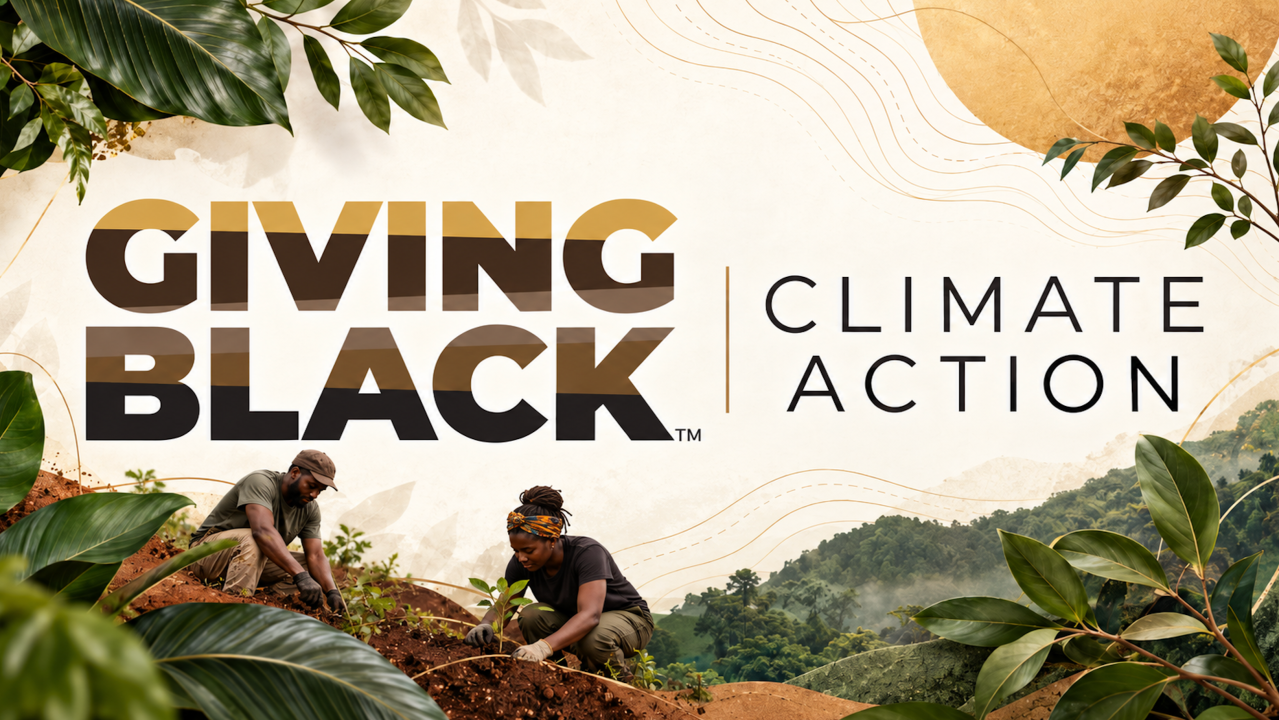
Dreams do come true.
On the eve of the Giving Black Virtual Conference and Soirée, I am reflecting on my learning journey since planning our incredible gathering. This is literally a dream come true. I had thought about a climate action conference that tells the varying histories and stories of Black and Indigenous people as stewards of land, sea and air, and here we are. As we enter the Fall, I'm considering climate action in the context of the things I knew nothing about but learned on the way as a convenor of this important Black climate action discussion.
July was a memorable month.
My long-time friend from London, England,
Chris East BSc hons MCIOF
was visiting Toronto for a conference. We met on July 15, on a day when the sky turned orange and the air became thick with smoke. Wildfires burning across northwestern Ontario had sent smoke hundreds of kilometres south, filling Toronto’s air with fine-particle pollution. For much of that morning and afternoon, Toronto sat at the top of global air-quality rankings. I tried to convince my friend that this was not a typical day in Toronto but we both feared it may become a trend.

Then came August.
My friend returned to London, where temperatures at Kew Gardens reached 38.1°C on August 13, making it one of the hottest days ever recorded in the United Kingdom. Europe was sweltering beneath a major heat dome. When me and another London friend, Alexander Adewole, MBA connected for a Giving Black Podcast Episode, he shared how hose pipe and BBQ bans were in place and how green spaces across the City of London had turned into scorched brown. Never had he seen or experienced this level of heat in London but we both feared it may become a trend.
That same month, near the Nepal-Tibet border, scientists investigated a catastrophic flash flood that may have been triggered by the collapse of part of a glacier. Ice, rock and sediment came crashing down from more than 5,000 metres above sea level. Researchers pointed to unusually high temperatures and the accelerating loss of Himalayan ice as part of the wider context, and but we all fear it may become a trend.
Then September came.
A US federal appeals court ruled in a case brought by residents of Jackson, Mississippi, that the US Constitution does not guarantee a right to clean water. The residents had alleged exposure to drinking water contaminated by lead and other pollutants. The court described their alleged injuries as serious, while ruling that they did not establish the constitutional rights claimed in the case. We should all be fearful about whether or not we have the right to fresh drinking water, as water pollution is already a well-established global trend.
Now we enter another Caribbean hurricane season remembering Hurricane Melissa, which struck Jamaica as a Category 5 hurricane in October 2025 and caused widespread destruction across parts of the Caribbean. A year later, later, communities were still rebuilding homes, health systems and lives. Every year the lack of effective preparation for such hurricanes is already a well worn-trend.
As I type, the world is concerned about El Niño. Tokyo has had 35 non-stop days of rainfall, amassing two feet of showers in a month. The water in the eastern Pacific is about 3°C warmer than normal, a big jump which scientists say may become one of the strongest ever recorded. If this becomes a trend, our entire planet and livelihoods are at increased risk of major, social, economic and ecological risk.
And here I am, engaged in last minute preparation to convene our 6th Annual Giving Black Virtual Conference, focused on Black climate action. I realize that such gatherings need to be had but so few of them exist. Here's where a trend is needed, in our capacity to confront the issues that impact our environment, and seek solutions.
I knew I knew too little.
I cannot exactly say I knew nothing about climate action before we decided to make it the focus of this year’s Giving Black Conference. As a social impact advocate, conversations about climate and our natural environment were always somewhere around me. They just seemed peripheral to my work and to the work of many of the organizations I worked with.
It is now clear to me that when we speak about social action, we are very often speaking about climate action too, whether we know it or not. When we speak about poverty alleviation, we are also talking about people’s proximity to affordable, healthy food.
If we advocate for children’s rights, we are also talking about their right to green, open and safe spaces where they can play, grow and be fit. When we address disability, we are also talking about creating navigable physical environments, accessible homes and workplaces, and clean air.
If we consider health, housing, food security, community development and economic justice, the environment is already in the conversation. Yet Black people and the issues affecting our communities remain the focus of thousands of charities and social movements without climate impact always being connected to those social outcomes. And the reverse is also true: climate discussions can take place without sufficiently examining the social realities of Black communities.
For decades, I passively went along with the idea that climate issues were far too complex for Black non-experts like me to grasp. It was, after all, a space awaiting solutions from smart white men, who seem to dominate this discussion, at least on TV and in social media.
The carbon-emissions industry. The clean-tech industry. The alternative-energy industry. The waste-management industry. Somehow, I had it in my mind that these climate industrialists were taking care of my future, and I had nothing to worry about. Why interfere or trouble myself with climate issues, when I could simply trust others and their expertise?
Plus, let’s face it, what do I really know about CO₂ or COP20?
Who said ignorance is bliss?
In our modern age, where information sits at our fingertips, ignorance can quickly become negligence. At some point we have to ask: if I do not know, is it because the information is unavailable, or because I have decided I do not need to know?
How much longer could I ignore what was increasingly happening around me in relation to our climate? I breathed that heavy smoke in July and I saw that orange sky. And I became more concerned about my own ignorance and peripheral role in climate action.
My curiosity was eventually lit by the thing that almost always gets my attention: Black people doing remarkable things in communities I care about. I knew of Zamani Ra and the work of CEED Canada, bringing culturally relevant environmental education directly into social-housing communities and challenging assumptions about who cares about climate change.
I heard Julius Lindsay (he/him) speak about the Prismatic Project and the use of Black culture, Afrofuturism, storytelling and games to help communities imagine different climate futures.
I connected with Naolo Charles, and saw first-hand how he brought Black communities in Toronto together to consult them on climate issues, through his Black Environmental Initiative, dedicated to planting trees in every community around the world.
And suddenly climate action began looking much less like an abstract peripheral scientific discussion happening somewhere else. And more like a home-grown cultural experience connected to the past, present and future of Black thought. It tuned out that these three amazing Black climate activists had a global connection with other peers. And that's how we began to curate what I consider to be one of the most necessary and eclectic global Black climate action conferences.
How can Black climate action enter the picture?
Research in the United States has found that majority communities of colour have less tree canopy and more heat-absorbing surfaces than majority-white neighbourhoods, contributing to unequal exposure to urban heat.
Food affordability matters too. Research published by the UN Food and Agriculture Organization shows that fruits, vegetables and other nutrient-dense foods remain more expensive than basic calorie sources, while some ultra-processed foods can cost less than unprocessed alternatives. Rising food prices can make a healthy diet even harder for lower-income households - thus the rise in obesity levels across the world and especially in Black communities.
There are growing social and environmental impacts facing Black people around the world, and many of us across Black and African communities remain disconnected from how closely they touch our everyday lives.
But back to why I had never fully felt that climate action was my business. Too often, the activism and imagery surrounding mainstream climate conversations have failed to make Black and Afro-Indigenous people visible as essential participants in the debate.
Our opening keynote speaker,
Vanessa Nakate, knows exactly what that erasure can look like. In 2020, after appearing at a climate press conference in Davos alongside four white European climate activists, Vanessa was cropped out of an Associated Press photograph. She was the only Black person in the original image. The Associated Press later apologized and described the decision as a mistake.
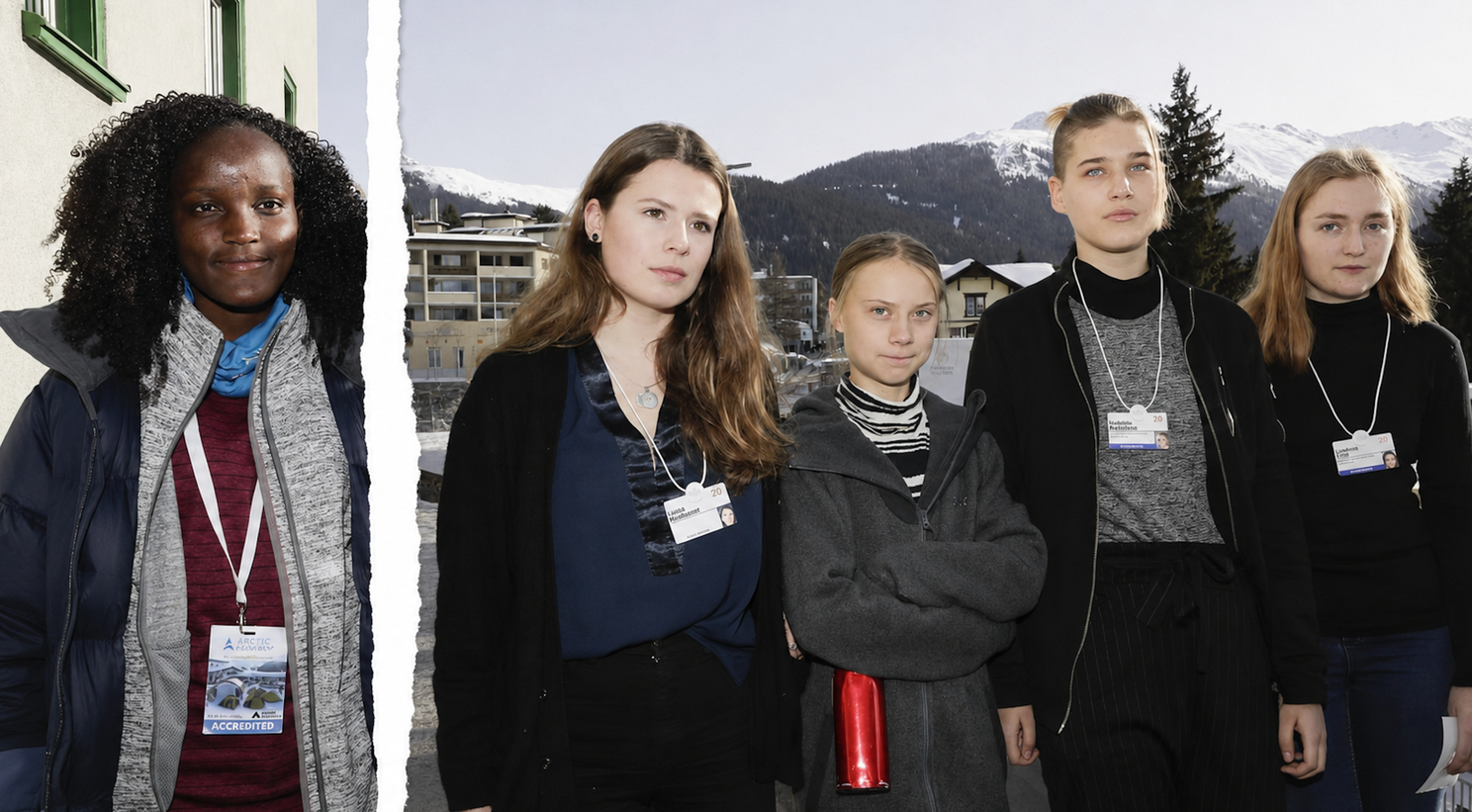
That photograph has stayed with me because there is something deeply disempowering about being present in the work and still being cropped out of it. How can we get back into the picture?
On October 1, we are bringing together 21 Black and Indigenous climate-action experts, grassroots movers and shakers, philanthropists, fundraisers, artists, knowledge holders and community leaders, from eight countries, all gathering through one virtual Conference. In doing so, we are reinforcing the fact that Black voices are important to our climate discussions and actions, and we're seeing what happens when we ourselves can collaborate and share our knowledge and resources.
Towards Afro-Ecology.
I have also come to understand that Black Climate Action can be intense, solitary and severely underfunded work. Many of the people doing it are carrying extraordinary responsibilities with resources that do not match the weight of the challenges they are confronting or the scope of the opportunities that are in front of them. That is why philanthropy and fundraising belong in this conversation.
One of the ideas emerging through this work is the need to expand our definition of Afroecology: the use of traditional and contemporary African land conservation and farming techniques.
What if we understood Afro-Ecology more holistically, bringing together land-based practices with artistry, storytelling, wellness, skills-sharing, our knowledge of and relationships with land, sea, air, water and fire, alongside philanthropy and fundraising?
My point is that Afro-Ecology can encompass our care for land, culture, art and one another, as well as the stewardship of our wealth, our financial investment in the land, and our ability to raise the funds needed to sustain this work. Taken together, these assets and practices offer a powerful foundation for organizing and mobilizing ourselves, our communities and our world behind climate action. The exact issues our Giving Black Conference aims to table.
This interpretation of Afro-Ecology asks us to think about climate action through the fullness of who we are, what we know, what we need, how we collaborate, what we can contribute, and how we all benefit. There is a greater strength that comes from our collective power. This collective power is what we must turn into a well-needed trend.
The Giving Black Conference, Rooted and Rising: From The Soil To The Sky, is on October 1, 2026. I'll be sharing more about how we learned and where we go form here in the following days.